
Reviewed and fact-checked September 1, 2026
Editorial correction October 11, 2026: battery-life wording now separates Hume’s advertised figure from the cited reviewer’s observed result. This correction does not constitute a new hands-on test or a complete specification recheck.
If you are trying to understand your sleep, recovery, and daily readiness without wearing another glowing screen, these three bands are likely to catch your attention. The Hume Band 2.0, Herz P1 Smart Band, and WHOOP 5.0 all promise useful health and fitness insights in a lightweight, screenless design—but they approach that goal very differently.
That can make choosing one surprisingly difficult. A long list of measurements does not automatically mean more accurate information, and the least expensive band is not always the best long-term value. Comfort, battery life, app quality, subscription costs, and the way each company turns sensor readings into practical guidance all matter.
In this comparison, we will look beyond the marketing language and examine what each band measures, how it feels to wear, what it costs to keep using, and where its limitations may affect you. Whether you are returning to fitness, trying to improve your sleep, managing recovery from an active job, or simply becoming more aware of your body, the goal is to help you choose the tracker that fits your real life—not just the one with the most impressive feature list.
WHOOP is the most developed performance system of the three. Hume offers a broader wellness focus without requiring a subscription for core data. Herz competes primarily on price, battery life, and simplicity. The best choice ultimately depends on how much coaching, technical confidence, and ongoing cost you want.
This article contains Amazon affiliate links. Avrontis may earn a commission from qualifying purchases at no additional cost to you. As an Amazon Associate I earn from qualifying purchases.
How this comparison was prepared: This is a research-based editorial comparison, not a laboratory test or a claim that Avrontis personally tested all three devices. Specifications were checked against manufacturer documentation, support pages, manuals, and independent reporting where available. These devices are wellness tools—not substitutes for professional medical evaluation.
In this comparison
Comparing just these two? Jump to the Hume Band 2.0 vs. Herz P1 decision.
- Quick verdict
- Specifications and ownership cost
- Hume Band 2.0
- Herz P1 Smart Band
- WHOOP 5.0
- Technical differences
- Final ranking
- Frequently asked questions
Quick verdict
- WHOOP 5.0: training and recovery coaching — consider it if you will use the guidance regularly and accept an ongoing membership.
- Hume Band 2.0: wellness without a required subscription — review its workout-accuracy limitations before choosing it for training.
- Herz P1: low upfront cost — read the evidence and water-resistance cautions before buying.
Compare the details below, then check the exact model and seller terms.
On a phone, swipe left across either comparison table to see every column.
| Rank | Product | Best for | Biggest drawback |
|---|---|---|---|
| 1 | WHOOP 5.0 | Serious training, recovery guidance, and behavior coaching | A continuing membership is required |
| 2 | Hume Band 2.0 | Sleep, recovery, and wellness tracking without a required subscription | Independent reporting raises workout heart-rate accuracy concerns |
| 3 | Herz P1 Smart Band | Low-cost, low-maintenance trend tracking with long battery life | Limited independent validation and conflicting water guidance |
Our overall recommendation: Choose WHOOP 5.0 if you will use its coaching frequently enough to justify the annual cost. Choose Hume Band 2.0 if you want a more approachable wellness tracker without a required subscription. Choose Herz P1 only when budget and battery life matter more than independent validation.
Specifications and ownership cost
| Feature | Hume Band 2.0 | Herz P1 Smart Band | WHOOP 5.0 |
|---|---|---|---|
| Best for | General wellness and recovery without a required subscription | Budget-conscious, basic trend tracking | Training, recovery, strain, and behavior coaching |
| Price checked September 1, 2026 | Approximately $249 from Hume; promotions can change | Approximately $59.99 | WHOOP One starts at approximately $199 per year |
| Required subscription | No | No | Yes |
| Optional subscription | Hume Premium adds deeper guidance | None advertised | Higher WHOOP tiers add features and, at the Life tier, WHOOP MG hardware |
| Approximate first-year cost | $249 before optional Premium service | $59.99 | $199 for WHOOP One |
| Approximate two-year cost | $249 before optional Premium service | $59.99 | $398 if WHOOP One renews at the same annual price |
| If payments stop | Core tracking remains available; Premium features end if subscribed | No subscription to cancel | The device and its analysis are membership-based; continued WHOOP use requires an active plan |
| Display | None | None | None |
| Advertised battery | Up to 14 days | About 25–30 days typical; up to 60 days standby | 14+ days |
| Weight | Manufacturer does not clearly publish it on the product page | About 25 g | 26.5 g |
| Core sensors/metrics | HR, HRV, SpO2, skin temperature, sleep, activity, strain and recovery | HR, HRV, SpO2, temperature, sleep, steps, stress and recovery | HR, HRV, respiratory rate, skin temperature, sleep, strain and recovery |
| GPS | No onboard GPS disclosed | No onboard GPS | Uses phone GPS for mapped activities; no watch-style GPS screen |
| Water rating | IP68; Hume specifies 1 m for up to 2 hours | Official material conflicts: 1 ATM/10 m appears in specifications, while the FAQ says splash/sweat only | IP68; WHOOP says submersible to 10 m for up to 2 hours |
| App | Hume Health | QRing | WHOOP |
Prices and plan terms are snapshots, not guarantees. Check the current seller, included accessories, renewal terms, and exact model before purchasing.
Hume Band 2.0: the balanced, subscription-optional choice
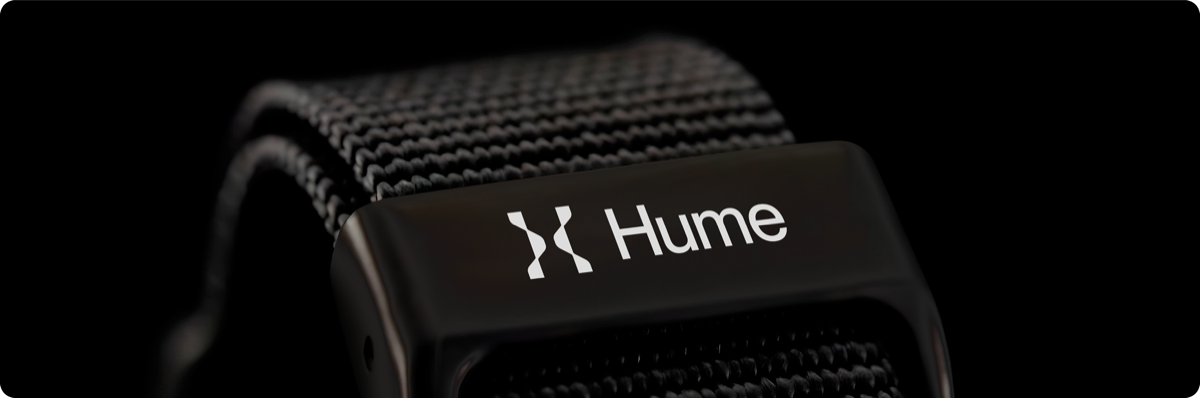
Hume Band 2.0. Image courtesy of Hume Health.
Verdict: The best balance of wellness insights and manageable long-term cost.
Best for: Adults who want sleep, recovery, and general health trends without making an annual membership part of the purchase.
Cost: Approximately $249 at the time of fact-checking. Core tracking does not require a subscription; Hume Premium is optional.
The Hume Band 2.0 sits between the simplicity of Herz and the coaching intensity of WHOOP. Hume says the device uses five LEDs and four photodiodes to collect continuous heart-rate, heart-rate-variability, blood-oxygen, sleep, skin-temperature, movement, strain, and recovery signals. Its app emphasizes trends such as metabolic capacity and “metabolic momentum,” which makes the experience feel more wellness- and longevity-oriented than competition-oriented.
Comfort and wearability
The slim, screenless design and soft woven strap are well suited to overnight wear. Independent reviewer Wareable described it as light, discreet, and comfortable for sleep, although wearing it tightly during exercise could cause some chafing. That matters because optical sensors usually need close, stable skin contact—but overtightening any tracker can trade signal stability for discomfort.
Tracking and accuracy
Hume provides a broad wellness picture, but more metrics do not automatically mean better precision. The company describes the Band 2.0 as a wellness device, and its blood-pressure feature is intended to show trends rather than replace a validated cuff. Wareable’s independent review found the broader experience useful but reported heart-rate inaccuracies during exercise. For general sleep and recovery patterns, that may be acceptable; for heart-rate-zone training or clinical decisions, it is an important limitation.
Battery and water resistance
Hume advertises up to 14 days between charges. Its IP68 documentation specifies immersion at one meter for up to two hours. That is useful protection for ordinary wear, but it should not be interpreted as permission for deep-water activities beyond Hume’s stated limit.
Pros
- Core tracking works without a required subscription.
- Hume advertises up to 14 days; Wareable reported about seven days in its Band 2.0 test. Actual endurance can vary.
- Its wellness and longevity framing may feel more approachable than WHOOP’s athletic dashboard.
- The slim design is unobtrusive at night and at work.
Cons
- Independent testing is still limited compared with WHOOP.
- Wareable reported heart-rate accuracy problems during workouts, so athletes who depend on precise interval data should be cautious.
- Hume’s blood-pressure feature is presented as trend insight, not a cuff replacement or medical measurement.
- Some advanced interpretation sits behind the optional Premium plan.
Check current Hume Band 2.0 availability on Amazon (affiliate search link; confirm the seller and exact model before buying)
Hume Band 2.0 vs. Herz P1: which tradeoff fits you?
Choose by your priorities: Hume is our more balanced wellness choice if its higher upfront cost fits your budget. Herz is the budget option if you accept a thinner independent evidence base and the conservative water-use guidance below. Neither should be chosen simply because it advertises more measurements.
If avoiding recurring bills is your priority, use our fitness trackers without a subscription guide to separate core features from optional upgrades and compare two-year costs. Payment model alone does not establish accuracy or suitability.
Herz P1 Smart Band: the budget and battery-life pick
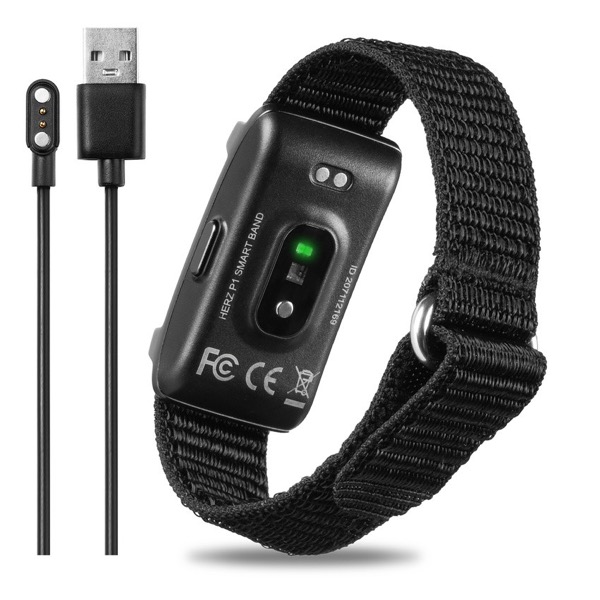
Herz P1 Smart Band and charging cable. Image courtesy of Herz P1.
Verdict: An inexpensive entry point with excellent claimed battery life, but the weakest supporting evidence of the three.
Best for: Buyers who want basic personal trends at the lowest initial and long-term cost.
Cost: Approximately $59.99 at the time of fact-checking, with no subscription advertised.
The Herz P1 is the value play. Its manual lists a 175 mAh battery, a weight of about 25 grams, and a thickness of approximately 8 mm. The QRing app handles the display and analysis because the band itself has no screen.
Herz lists heart rate, HRV, blood oxygen, skin temperature, sleep, steps, distance, calories, stress, recovery, and more than 100 sport modes. It does not have onboard GPS, so it is not the best choice if route and pace mapping are central to your training.
Comfort and wearability
At roughly 25 grams with a nylon band, the P1 should be easy to forget during everyday wear and sleep. The adjustable fabric is a plus for fit, but Herz has far less independent long-term comfort reporting than WHOOP or Hume. In other words, the design looks wearable on paper, but the evidence base is thinner.
Tracking and accuracy
The P1 advertises an unusually broad collection of health and fitness measurements for its price. However, there is little independent testing showing how closely its heart rate, sleep stages, blood oxygen, or derived recovery scores agree with reference devices. The safest way to use it is to look for changes in your own longer-term patterns rather than comparing a single reading with a medical measurement or another brand’s score.
Battery and water resistance
Herz claims approximately 25–30 days of typical use and up to 60 days of standby time, making battery life its clearest advantage. Water protection is less straightforward.
A necessary water-resistance warning
Herz’s own material is inconsistent. The product specifications and manual refer to 1 ATM or 10-meter water resistance, while the official FAQ says the band is intended for sweat and splashes and should not be used for swimming or hot showers. Until Herz resolves that conflict, the conservative choice is to treat the P1 as splash- and sweat-resistant only.
Pros
- The lowest purchase price of the three.
- No recurring subscription is advertised.
- Excellent claimed battery life.
- Lightweight, screenless design with a broad list of basic wellness metrics.
Cons
- Limited independent accuracy testing and validation.
- Sensor and algorithm documentation is less detailed than WHOOP’s or Hume’s.
- Conflicting official water-resistance guidance reduces confidence.
- No onboard GPS and a less mature coaching ecosystem.
See the Herz P1 Smart Band on Amazon (affiliate link; confirm the exact model, seller and included accessories)
WHOOP 5.0: the best performance and recovery system

WHOOP 5.0 worn on the wrist. Image courtesy of WHOOP.
Verdict: The strongest overall system for turning continuous data into useful training, sleep, and recovery guidance.
Best for: Active people who want detailed coaching and are comfortable paying every year for the platform.
Cost: WHOOP One starts at approximately $199 per year at the time of fact-checking. Higher tiers cost more and unlock additional features.
WHOOP 5.0 is the most complete system in this comparison. The device measures 34.7 × 24 × 10.6 mm and weighs 26.5 grams. WHOOP says its enhanced optical sensor system samples data 26 times per second, while updated motion and skin-temperature sensing feed its sleep, strain, recovery, stress, and health-monitoring tools.
The tracker can remain on the wrist or be worn in validated WHOOP Body garments when wrist placement is inconvenient.
The important catch is that WHOOP is a membership product. As of this fact-check, U.S. annual pricing begins around $199 for WHOOP One, with higher tiers adding more analysis and hardware options. Features can change by tier. Standard WHOOP 5.0 should not be confused with WHOOP MG: ECG, irregular-heart-rhythm notifications, and blood-pressure insights are Life-tier/WHOOP MG features, not features of the standard 5.0 sensor.
Comfort and wearability
WHOOP 5.0 is seven percent smaller than WHOOP 4.0 and is designed for uninterrupted wear. The fabric band is soft and secure, and the lack of a screen keeps it unobtrusive during sleep. The tradeoff is that woven straps can stay damp after swimming or showering. Anyone wearing WHOOP continuously should rinse, dry, and rotate bands as needed to reduce irritation.
Tracking and accuracy
WHOOP has the most mature analysis platform here, but it is not flawless. Its strength is combining multiple signals and behaviors into understandable recovery, strain, and sleep guidance. Independent Wareable testing still found that workout heart rate could run high, low, or align closely with reference devices depending on the activity. That variability matters for precise heart-rate-zone analysis, even when the broader recovery experience remains useful.
Battery and water resistance
WHOOP advertises 14+ days of battery life. Depending on the membership package, its PowerPack can reduce gaps by charging the tracker while it remains on the wrist. WHOOP rates the 5.0 IP68 and specifies submersion to 10 meters for up to two hours, the clearest and most generous documented water guidance among these three products.
Pros
- The deepest strain, sleep, and recovery coaching of the three.
- A mature app that connects behavior choices with recovery trends.
- Strong multi-sport and 24/7 wear options, including WHOOP Body placement.
- Peak and Life packages can include a wireless PowerPack that charges on the wrist, helping minimize gaps in data.
Cons
- The required membership makes long-term ownership far more expensive.
- The volume of data can feel demanding if you only want simple wellness trends.
- The standard WHOOP 5.0 does not include the ECG and blood-pressure features advertised for WHOOP MG.
- A damp fabric strap can be uncomfortable unless it is dried or swapped.
See WHOOP One with WHOOP 5.0 and a 12-month membership on Amazon (affiliate link; verify the included membership and renewal terms before purchase)
Technical similarities—and the differences that matter
All three devices are screenless optical trackers. Each is designed to gather continuous signals from the wrist and translate them into sleep, activity, stress, or recovery trends in a phone app. None is a medical-grade substitute for an ECG, blood-pressure cuff, pulse oximeter, or clinician.
The bigger differences are not the checklist metrics; they are transparency, algorithms, and coaching. WHOOP has the most developed performance model and the most demanding business model. Hume gives you broader wellness interpretation without making a subscription mandatory. Herz offers many claimed metrics at a low price but provides the least independent evidence for how well those metrics perform.
Battery life also changes the experience. Hume and WHOOP advertise roughly two weeks. Wareable reported about seven days in its Hume Band 2.0 test, so the advertised figure should not be treated as observed endurance. Herz claims roughly twice that under typical conditions. Water guidance favors WHOOP for clear, documented immersion use; Hume specifies shallower immersion; Herz should be treated conservatively because its own pages disagree.
Final ranking
1. WHOOP 5.0 — best overall
WHOOP wins because the value of a recovery tracker comes from interpretation, not merely sensor count. It offers the strongest coaching, training context, and platform maturity. The annual fee is substantial, but for committed users it also funds the part of the product that is hardest to replicate: useful analysis.
2. Hume Band 2.0 — best value without a required subscription
Hume is the more sensible choice for many everyday users. Published reporting describes comfortable wear. Hume advertises up to 14 days between charges, while Wareable reported about seven days in its Band 2.0 test. Core tracking does not require an annual plan. It finishes behind WHOOP because workout accuracy concerns and a smaller independent evidence base make it harder to recommend for serious training decisions.
3. Herz P1 Smart Band — best budget choice
Herz delivers the lowest entry price and the longest claimed battery life. It ranks third because documentation and independent validation matter when a device is turning biological signals into health-like scores. The conflicting water guidance is another avoidable concern.
Which one should you buy?
- Choose WHOOP 5.0 if improving training, sleep, and recovery behavior is worth an ongoing membership.
- Choose Hume Band 2.0 if you want a more affordable long-term wellness tracker without a required subscription.
- Choose Herz P1 if price and battery life matter most and you are comfortable treating its data as broad personal trends rather than precision measurements.
Prices, sellers, included accessories, and membership terms can change. Confirm the exact listing before purchasing.
- Hume Band 2.0 availability on Amazon (affiliate link; verify the seller and exact model)
- Herz P1 Smart Band on Amazon (affiliate link)
- WHOOP One with WHOOP 5.0 on Amazon (affiliate link; verify membership and renewal terms)
Whichever band you choose, watch the trend over time rather than reacting to a single score. Wearables are most useful when they help you notice repeatable relationships—late meals and sleep, training load and fatigue, alcohol and recovery—not when one imperfect number dictates your day.
Frequently asked questions
Does the Hume Band 2.0 require a subscription?
No. Hume says its core tracking experience is available without a required subscription. Hume Premium is optional and adds more interpretation and guidance.
Can you swim with the Herz P1 Smart Band?
We would not recommend it. Herz’s specifications refer to 1 ATM or 10-meter resistance, but its official FAQ says the band is intended for sweat and splashes and should not be used for swimming or hot showers. Following the more conservative official guidance is safest.
Does the standard WHOOP 5.0 measure blood pressure or provide ECG readings?
No. Those features belong to WHOOP MG with the Life membership tier. The standard WHOOP 5.0 included with WHOOP One or Peak should not be advertised as an ECG device or blood-pressure monitor.
Which band is most comfortable for sleeping?
All three are light and screenless, but Hume and WHOOP have the strongest published comfort evidence. Hume is slim and discreet, while WHOOP offers a refined fabric band and optional alternative body placements. Individual fit and skin sensitivity still matter.
Which tracker has the longest battery life?
Herz claims the longest battery life at approximately 25–30 days of typical use. Hume and WHOOP each advertise roughly two weeks, which is still substantially longer than many screen-equipped smartwatches.
Which option is best for adults over 40?
Hume is likely the most approachable choice for general wellness, sleep, and recovery without recurring costs. WHOOP is stronger for adults following structured training who want more detailed coaching. Herz can provide inexpensive trend tracking, but its measurements have less independent validation.
Is WHOOP 5.0 worth the annual membership?
It can be if you regularly use its recovery, strain, sleep, journal, and coaching features to change your habits or training. If you only want basic measurements and occasional sleep trends, Hume offers a lower long-term cost.
Sources and verification notes
- Hume Band 2.0 official product page
- Hume Band specifications and feature overview
- Hume blood-pressure insights explanation
- Wareable independent Hume Band 2.0 review
- Herz P1 official product page
- Herz P1 official FAQ
- Herz P1 manual
- WHOOP 5.0 official specifications and feature guide
- WHOOP membership overview
- WHOOP membership pricing
Affiliate disclosure
As an Amazon Associate, Avrontis earns from qualifying purchases. If you purchase through an eligible Amazon link in this article, Avrontis may receive a commission at no additional cost to you. This does not influence the rankings or conclusions in this comparison. Product prices, availability, sellers, included accessories, and membership terms can change, so please confirm the exact product and offer before purchasing.
4 thoughts on “Hume Band 2.0 vs. Herz P1 vs. WHOOP 5.0: Which Screenless Fitness Tracker Is Best?”