
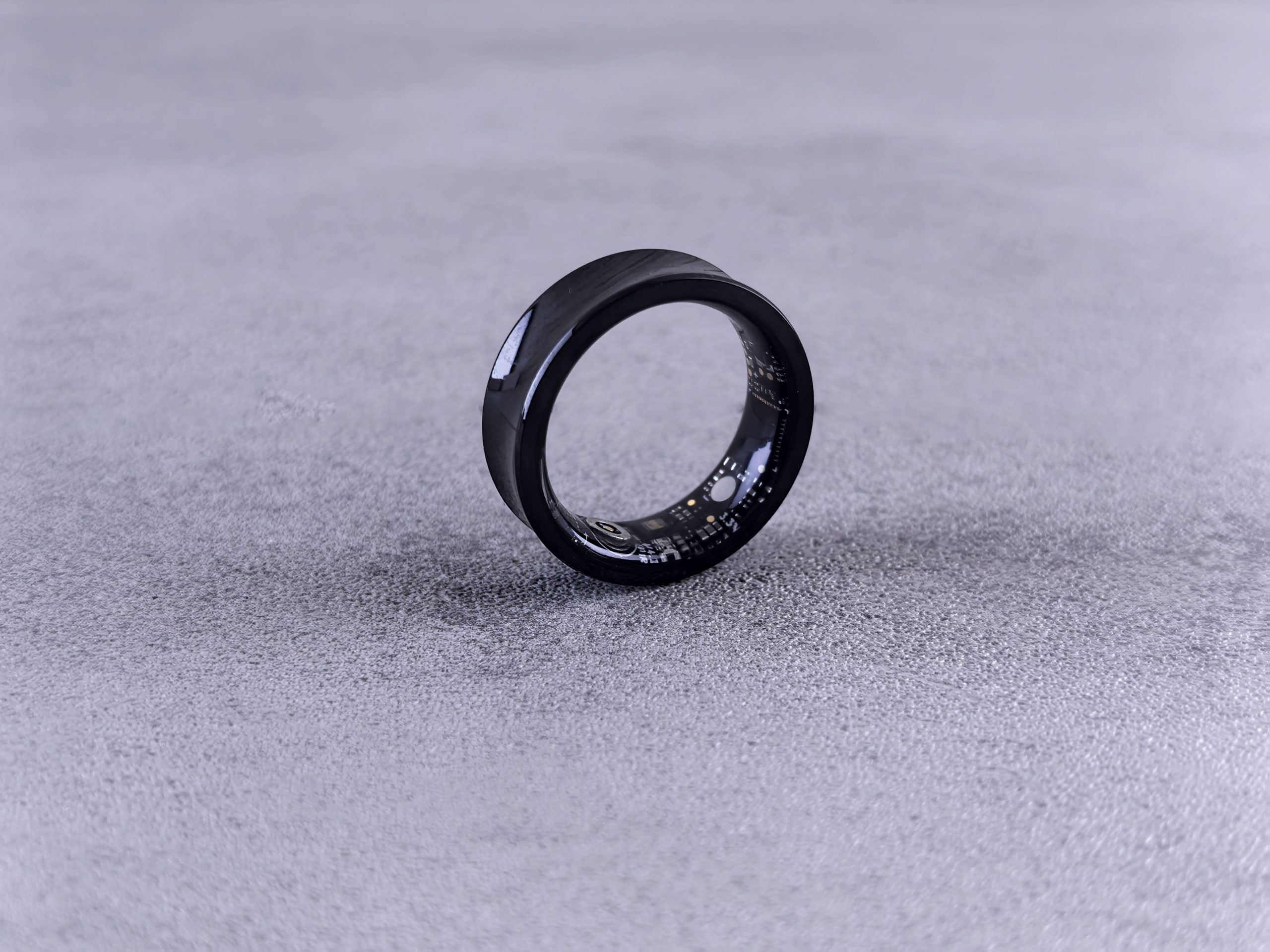
You strap on a smart ring or a fitness band, and the next morning it hands you a number. 62. Or maybe it’s a color — green, yellow, red. Whatever the format, the message is the same: this is supposed to tell you something about your body. But what?
This article contains Amazon affiliate links. If you buy through one, Avrontis may earn a commission at no additional cost to you. Product selections are independent. As an Amazon Associate I earn from qualifying purchases.
How this guide was prepared: This educational article uses current manufacturer documentation and independent wearable-validation research. It is not a simultaneous head-to-head test of the three linked products, and no manufacturer sponsored or reviewed it. Product links are independently selected examples.
If you’ve never tracked your HRV before, that number can feel like it’s speaking a different language. You’re not alone in that, and you’re not behind. Most people buying their first recovery tracker have no idea what they’re looking at for the first few weeks. This guide is here to change that — no medical degree required.
What HRV Actually Is
HRV stands for heart rate variability: the natural variation in time between consecutive heartbeats. Even when your average heart rate looks steady, the beat-to-beat intervals are not perfectly identical. HRV is commonly reported in milliseconds, but different devices may calculate and summarize it differently.
HRV reflects the combined influence of the autonomic nervous system and many other factors, including breathing, posture, sleep, training load, illness, alcohol, medications, age, measurement timing, and signal quality. It should not be interpreted as a simple meter that directly measures “stress” or “recovery.”
A higher value relative to your own usual range can accompany good recovery, while a lower value can accompany strain, poor sleep, illness, or hard training. But higher is not automatically better. An unusually high, erratic, or sudden change can also come from measurement error or an irregular rhythm. The useful question is usually whether a consistently measured value has changed from your personal pattern—and whether that change agrees with how you feel.
There is no universal healthy HRV target that applies across devices and people. Avoid comparing your raw number with someone else’s unless the device, metric, posture, and measurement conditions are the same.
5 Reasons Your HRV May Be Lower Today
A single lower reading does not identify one cause, but these are five common possibilities worth checking against your own routine:
- Short or disrupted sleep. Sleep loss can change autonomic activity and reduce some commonly reported HRV measures, although individual responses vary.
- Recent training load. A difficult workout—especially one that is unusual for you—can temporarily shift HRV while your body responds to the effort.
- Alcohol or hydration changes. Acute alcohol intake is associated with lower resting HRV in research, while dehydration and changes in routine can also affect wearable readings and recovery context.
- Psychological stress. HRV measures often change during stress, but a wearable cannot tell you the exact cause from HRV alone.
- Illness, medication, or measurement noise. Health changes, medications, poor sensor contact, movement, and an inconsistent measurement time can all influence the number.
What matters most: compare the reading with your normal range, recent habits, symptoms, and a consistently measured multi-day trend—not someone else’s score.
Why Your Readiness Score Isn’t Just HRV
If you’ve looked at an Oura Ring, WHOOP band, or Garmin watch, you’ve probably noticed the app doesn’t just show you “HRV.” It shows you a bigger number — a Readiness Score, a Recovery percentage, a Body Battery. This is where a lot of beginners get tripped up, because that headline number is actually a blend of several signals, not HRV alone — which is exactly why Oura, WHOOP, and Garmin scores rarely match on the same night.
Each brand builds this differently, which is exactly why you might feel confused seeing different scores from different devices. Some near-universal ingredients across most of these scores include HRV, resting heart rate, sleep duration and quality, and recent physical activity or strain.
A few examples of how this plays out:
- WHOOP uses HRV as a major Recovery input along with resting heart rate, sleep, respiratory rate, skin temperature, and other signals. WHOOP’s current method calculates HRV as a weighted average across the whole night, with more weight given to slow-wave sleep and later sleep—not one deep-sleep-cycle snapshot.
- Oura Ring 5 builds Readiness from nine contributors, including resting heart rate, HRV Balance, body-temperature variation, sleep, and activity-balance measures. Its HRV Balance compares a recent 14-day average with a longer three-month personal average, with more weight on recent days.
- Garmin Venu 3 takes a somewhat different approach with Body Battery, treating it more like an energy gauge that drains and refills across the day.
If you are deciding between newer screenless bands rather than a ring or smartwatch, see our Hume Band 2.0 vs. Herz P1 vs. WHOOP 5.0 comparison for feature, comfort, subscription, and value differences.
Because these products use different sensors, baselines, inputs, and proprietary formulas, their headline scores are not directly interchangeable. A disagreement does not by itself show which device is correct. Look at the underlying measurements, measurement conditions, multi-day trend, and how you actually feel rather than comparing the point values as though they share one scale.
So What Should You Actually Do With the Number?
Here’s the advice that would have saved most beginners a lot of unnecessary anxiety: don’t obsess over any single day’s score.
A few practical ways to use your readiness number without letting it run your life:
- Watch the trend, not just the snapshot. One low morning usually does not establish a pattern by itself. A sustained change deserves context: consider sleep, training, illness, alcohol, medication, measurement conditions, and how you feel.
- Use it as a nudge, not a verdict. A lower score does not automatically mean you must cancel a workout. Weigh it alongside symptoms, perceived fatigue, and your training plan.
- Allow time for a baseline. Follow your device manufacturer’s calibration and onboarding instructions. Once a baseline is established, use it to put new readings in context alongside your habits and how you feel.
- Look for repeatable patterns. Compare changes with habits such as alcohol, late meals, training, stress, and sleep quality. The useful insight is the relationship between your routine, your multi-day trend, and how you feel.
A Quick Word on Accuracy and Limitations
Wearable HRV and readiness scores are estimates, not diagnoses. Optical wearables can measure nighttime HRV reasonably well under stable resting conditions, but accuracy varies by device and generally worsens with movement or poor sensor contact. Independent research also shows that many readiness algorithms remain proprietary, which limits outside evaluation of how their recommendations are produced.
For cleaner personal comparisons, use the same device under similar conditions and focus on trends rather than mixing values from different brands. Do not use a readiness score to diagnose illness, decide whether a heart symptom is safe, or override medical guidance.
If your device repeatedly reports an irregular rhythm, or a sudden HRV change occurs with chest pain, fainting, unusual shortness of breath, or persistent palpitations, seek appropriate medical care. A wearable trend can be useful information to share with a clinician, but it cannot confirm or exclude a heart-rhythm problem.
Where to Start
Start with the tracker you already have, if you own one. Wear it consistently according to the manufacturer’s instructions and let it establish your personal baseline. Then use the readings to explore one practical question, such as whether a more consistent sleep schedule lines up with changes in your HRV and how rested you feel. You do not need a perfect score to learn something useful.
Have questions about a specific device or score? Reach out — we’re always happy to help you make sense of what your tracker is telling you.
Sources and Method Notes
- Systematic review and meta-analysis of portable-device HRV accuracy versus ECG
- 2025 validation study showing movement-related limitations in optical HRV wearables
- Validation of nighttime HRV across several consumer wearables
- 2026 review of consumer HRV apps and proprietary readiness algorithms
- WHOOP’s current Recovery and overnight-HRV methodology
- Oura’s current Readiness contributors and HRV Balance method
- Systematic review and meta-analysis of sleep deprivation and HRV
- Review of alcohol use and HRV
- Meta-analysis of psychological stress and HRV
This guide is part of our full Recovery Tech for 40+ guide, covering wearables, trackers, and the recovery tools worth trying.
4 thoughts on “HRV Trackers for Beginners: What the Numbers Actually Mean”